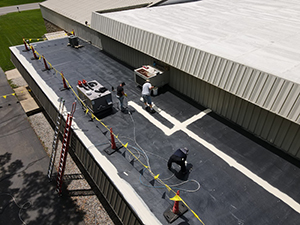
Commercial roof restoration in Coeur d’Alene, ID can be a practical way to extend the service life of an existing roof when the roof is still a sound candidate for coating. Flag Ship Foam and Coatings provides commercial roof restoration in northern Idaho, including acrylic and silicone coating systems. The decision should come from the roof’s actual condition, not from age alone or a generic cost comparison.
A roof that has repairable defects, a serviceable substrate, workable drainage, limited moisture, and a compatible surface may support restoration. A roof with saturated insulation, damaged decking, unresolved drainage problems, or widespread failure may need a different scope. To discuss a commercial roof restoration evaluation in Coeur d’Alene, call 208-946-3031.
The Impact of Commercial Roof Restoration
Restoration keeps the existing roof in place and adds repairs and a compatible coating system rather than starting with a full tear-off. When the roof qualifies, that can reduce removal work and defer replacement. How much service life or cost difference a restoration provides depends on the roof size, current condition, repairs, access, coating system, and written project requirements.
Any lifespan, warranty, or cost comparison should be tied to the actual system being proposed. Flag Ship Foam and Coatings works with multiple manufacturers and can provide system warranties of up to 20 years depending on the roof system, but the applicable term, provider, exclusions, maintenance requirements, and coverage should be confirmed in the written project documents.
Restoration, Repair, or Replacement?
The table below shows how five conditions can influence the decision. It is a planning guide rather than a pass-or-fail test. Final scope depends on inspection evidence, roof construction, concealed conditions, and the requirements of the selected restoration system.
| Condition | Repair May Be Enough | Restoration May Fit | Broader Scope May Be Needed |
|---|---|---|---|
| Moisture | The issue is localized and the surrounding assembly remains serviceable | Available evidence supports a roof that can be dried, repaired, or prepared to meet the restoration scope | Moisture is widespread, concealed extent remains significant, or saturated insulation changes the scope |
| Adhesion | Loose or failed material is limited and repairable | The prepared surface can meet the selected coating system’s adhesion requirements | The surface is broadly unstable, contaminated, delaminated, or otherwise unsuitable for the proposed system |
| Substrate condition | Damage is limited to defined details or areas | Deck and surrounding materials remain serviceable after the required repairs | Rotted, damaged, or unstable decking or widespread roof failure requires corrective work first |
| Drainage | A localized drain, scupper, or maintenance issue can be corrected | Water moves to drainage points as intended after any needed maintenance or repairs | Persistent ponding comes from unresolved slope, deck, drain, or other drainage defects |
| Compatibility | Repair materials are compatible with the existing roof | The proposed coating system is compatible with the existing roof and prior materials after proper preparation | The surface or existing materials cannot be prepared to meet the selected system’s requirements |
Coating does not correct ponding-water drainage defects, rotted decking, or saturated insulation. Those conditions need to be addressed directly and may change the project from restoration to a broader repair or replacement scope. For related options, see Flag Ship’s flat roof repair and flat roof replacement information.
Key Benefits of Commercial Roof Restoration

When the roof is a suitable candidate, restoration can offer several practical advantages:
- Less removal work: Keeping much of the existing roof in place can reduce tear-off and disposal compared with full replacement, although the actual difference depends on the project.
- Added service life: A compatible coating system can extend the useful life of a serviceable roof when preparation, repairs, application, and maintenance meet the system requirements.
- Reflective surface options: Acrylic and silicone coatings can provide reflective roof surfaces. The effect on cooling demand varies with the coating, building envelope, HVAC system, occupancy, and climate.
- Water-resistance at repaired details: Coating works as part of a restored assembly after seams, flashings, penetrations, and other defects are properly addressed.
- Potentially less disruption: Restoration may involve less removal than replacement, but access, repairs, weather, cure requirements, and building operations still affect the work plan.
Ideal Candidates for Commercial Roof Restoration
A roof is more likely to support restoration when the inspection shows a serviceable deck, repairable defects, manageable moisture conditions, workable drainage, and a surface that can be prepared for the selected coating. Flag Ship’s current commercial scope includes restoration for single-ply roofs such as TPO, PVC, and EPDM, spray foam roofing, and metal roof restoration. Each system requires compatible preparation and materials.
Building type does not determine candidacy by itself. Commercial, industrial, and agricultural properties can all have roofs that qualify or fail to qualify depending on their actual condition.
What the Restoration Process Includes
Assessment and preparation. The process begins by documenting the existing roof, visible damage, drainage, moisture concerns, prior repairs, and the surface that will receive the coating. If concealed moisture could change the scope, additional investigation should be selected for that roof and decision rather than assumed from one universal threshold.
Repairs. Damaged areas, seams, flashings, penetrations, and other defects are repaired before coating. Restoration should not be used to hide unresolved damage.
Application and acceptance. The selected coating is applied according to the written scope and system requirements for preparation, coverage, cure conditions, and other project-specific criteria. Acceptance should compare the completed work with those written requirements rather than rely on one universal field test.
Follow-up inspection. Later inspection can document coating condition, repaired details, drainage, and any new defects. It supports maintenance planning but does not guarantee future performance. Flag Ship’s flat roof coatings page provides more information about coating options.
Long-Term Benefits
For a roof that remains suitable, restoration can defer a full replacement and keep more of the existing assembly in service. Reflective coatings may also reduce roof-surface heat gain under the right conditions. Actual energy use depends on insulation, air leakage, HVAC operation, occupancy, climate, and the rest of the building envelope.
Future maintenance still matters. Coated roofs should be inspected according to the system, roof condition, weather exposure, rooftop activity, and written project requirements. Later recoating may be possible when the roof remains a suitable candidate, but that decision should be based on a new condition assessment rather than an assumed cycle.
Commercial Roofing Experts
Flag Ship Foam and Coatings has served commercial, industrial, and agricultural properties across Montana and northern Idaho for 20 years. For a Coeur d’Alene roof, the recommendation should follow what the inspection supports, whether that is repair, restoration, additional investigation, or replacement. Call 208-946-3031 to discuss a commercial roof restoration evaluation.
Frequently Asked Questions
How do I know if my commercial roof can be restored rather than replaced?
Restoration is more likely to fit when the deck remains serviceable, moisture is limited or manageable, drainage works properly, defects can be repaired, and the existing surface is compatible with the proposed system.
What types of commercial roofs can Flag Ship restore?
Flag Ship’s current scope includes restoration for TPO, PVC, and EPDM single-ply roofs, spray foam roofing, and metal roof restoration. The preparation and coating system depend on the existing roof.
Will a coating fix ponding water, rotted decking, or wet insulation?
No. Those conditions need to be corrected separately and may require a broader repair or replacement scope before restoration can be considered.
How much will restoration save on energy costs?
There is no fixed savings figure. Reflective coatings can reduce roof-surface heat absorption, but building energy use also depends on insulation, air leakage, HVAC operation, occupancy, and climate.