Post Falls has grown steadily as a commercial hub in northern Idaho, bringing warehouses, light industrial facilities, retail centers, and agricultural structures that share one characteristic: flat or low-slope roofs requiring different expertise than residential roofing. Understanding what commercial roofing companies do and how to evaluate them makes the difference between a project that holds up and one requiring follow-up work ahead of schedule. Commercial roofing companies in Post Falls, ID vary in capability, and knowing what to look for before the first bid arrives matters.
Call Flag Ship Foam and Coatings at (208) 946-3031 for commercial roofing companies in Post Falls, ID.
What Commercial Roofing Companies Do Differently
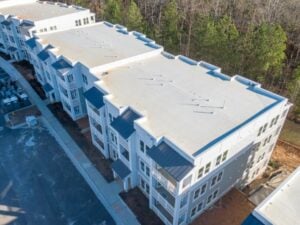
Commercial flat roof systems are technically distinct from residential pitched roofing in ways that matter when evaluating contractors. The membrane systems used on commercial buildings, including TPO, EPDM, PVC, and spray polyurethane foam, require specific installation techniques and knowledge of how each material performs in northern Idaho’s climate. Seam welding on thermoplastic membranes requires calibrated equipment and trained operators. Spray foam requires temperature and humidity levels to remain within specification. Coating systems require surface preparation steps that vary by substrate.
A contractor who specializes in commercial flat roofing has encountered these variables across many projects. A general contractor may have broad experience but limited depth in any single commercial system. For building owners whose roof carries significant replacement value, that distinction matters when collecting bids.
What a Commercial Roof Assessment Should Cover
A qualified commercial roofing company begins with a thorough assessment before recommending a course of action. For roofs with suspected moisture issues, infrared or electronic scanning can identify saturated insulation zones without material removal. Drain function, flashing integrity at wall and curb transitions, and seam condition on the existing membrane all belong in a complete evaluation.
The output should give the building owner a clear picture of what is happening. Knowing whether the insulation is dry, whether the membrane has remaining service life, and where the specific failure points are allows the owner to evaluate whether repair, restoration coating, or full replacement is the right response. A company that skips directly to a replacement recommendation without a documented assessment is worth questioning.
How to Compare Bids from Commercial Roofing Companies

When collecting bids, the critical step is confirming all proposals cover the same scope. A lower bid excluding insulation replacement, drain work, or flashing details may not be a better value than a higher bid that includes them. Ask each contractor to specify the membrane system proposed, insulation type and thickness, how flashings will be handled at penetrations and walls, and what warranty the installed system carries.
Manufacturer warranties and contractor workmanship warranties are separate. A membrane manufacturer may offer a twenty-year material warranty, but it is contingent on installation by a certified contractor and may require periodic inspections to remain in force. Understanding what each warranty covers and what is required to maintain it is part of evaluating any proposal.
Post Falls Commercial Roofing Companies
Approaching the market with the right questions produces better outcomes than selecting on price alone. Knowing what distinguishes commercial specialists, what a thorough assessment looks like, and how to read a bid puts the building owner in a stronger position. For commercial roofing companies in Post Falls, ID, contact Flag Ship Foam and Coatings at (208) 946-3031 today.
FAQ
What is the difference between a commercial roofing company and a general contractor? Commercial roofing companies focus on flat and low-slope membrane systems, including TPO, EPDM, PVC, spray foam, and coatings. General contractors handle a wider range of roof types but may have less depth in any single commercial system. For a flat roof, a contractor with specific experience in that system type typically produces better results and more reliable warranties.
What should a commercial roof assessment include? A thorough assessment covers the membrane surface for visible damage, all flashing transitions at walls and curbs, drain condition, and seam integrity on single-ply systems. For roofs with suspected moisture, electronic or infrared scanning can locate wet insulation without cutting into the roof. The result should be a condition report, not just a proposal.
How do I compare bids from commercial roofing companies? Confirm each bid covers the same scope: membrane type and thickness, insulation specification, flashing details, drain work, and warranty terms. A bid omitting insulation or flashing work may look less expensive while delivering a less complete result. Ask each contractor to state exactly what is included before comparing numbers.