For a commercial metal roof in Coeur d’Alene, ID, restoration can be a practical option when the existing roof is still serviceable and the conditions that would undermine a coating system have been addressed first. The decision should be based on moisture, adhesion, substrate condition, drainage, compatibility, and the extent of needed repairs rather than on roof age alone.
Flag Ship Foam and Coatings provides metal roof restoration within its commercial roofing scope. Property owners can call 208-946-3031 to discuss whether the existing roof is a sound restoration candidate.
Is This Roof a Good Candidate for Restoration?
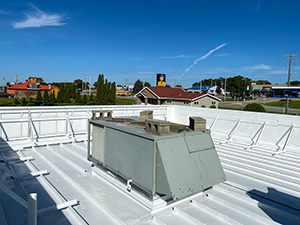
Restoration keeps the existing metal roof in place, so the roof needs to be suitable for repair, preparation, and the selected coating system. The table below separates conditions that can support restoration from conditions that need correction or broader review first.
| Factor | Evidence Supporting Restoration | Evidence Requiring Repair or Broader Review |
|---|---|---|
| Moisture | The roof assembly is dry enough for the selected system, with any limited affected areas identified and addressed. | Saturated insulation, trapped moisture, or an extent of moisture that has not yet been defined. |
| Adhesion and surface condition | The metal surface can be cleaned, repaired, and prepared to meet the selected system’s requirements. | Loose coatings, contamination, widespread corrosion, or another condition that prevents reliable adhesion. |
| Substrate condition | Panels, decking, and supporting materials remain serviceable after included repairs. | Rotted decking, structural deterioration, or widespread panel failure that coating cannot correct. |
| Drainage | Water sheds adequately or correctable drainage maintenance is included before restoration. | Chronic ponding caused by slope, drain, or structural conditions that need separate corrective work. |
| Compatibility | The proposed primer, repair materials, and coating are compatible with the existing metal and prior finishes. | Existing coatings, contaminants, or materials prevent the proposed system from meeting compatibility requirements. |
Coating does not correct ponding-water drainage defects, rotted decking, or saturated insulation. Those conditions need their own corrective scope before restoration proceeds. When the affected area is limited, repair may still support restoration. When deterioration is widespread or the roof assembly is no longer serviceable, replacement becomes a separate project path.
Common Metal Roof Conditions

Metal roofs can develop open seams, loose or deteriorated fasteners, corrosion, failed sealants, damaged flashing, and localized panel defects. Expansion and contraction can contribute to movement at details, but a visible seam or fastener problem should still be evaluated in the context of the surrounding roof rather than treated as proof of one universal cause.
Surface oxidation also varies in severity. Localized corrosion may be repairable after proper preparation, while widespread section loss or structural deterioration can move the project beyond a coating scope. Drainage concerns should likewise be treated separately from coating. A coating can protect a properly prepared surface, but it does not create slope or repair a structural low area.
Preparation, Repairs, and Application
A restoration project should begin with cleaning and preparation appropriate to the selected system. Loose material, contaminants, rust, failed sealant, open seams, damaged fasteners, and other included defects should be addressed before coating. The exact repair method depends on the metal roof, the condition found, and the coating system being used.
Application requirements should follow the selected product and written project specification. Primer, coverage rate, thickness, number of coats, cure conditions, reinforcement at seams or fasteners, and any adhesion checks are system-specific. There is no single application sequence or thickness that applies to every metal roof.
Application Acceptance and Follow-Up
Before closeout, the completed restoration should be reviewed against the agreed project requirements. Depending on the system and contract, acceptance may address repaired details, coating coverage, thickness, transitions, drainage areas, and other specified conditions. The closeout standard should come from the actual scope rather than an assumed universal checklist.
A restored roof still needs future inspection and maintenance. Follow-up timing should reflect the roof condition, exposure, selected restoration system, and any applicable project or product requirements. Recurring leakage, coating damage, corrosion, open details, or drainage changes are reasons to review the affected area sooner.
What Restoration Can and Cannot Deliver
Restoration can preserve an existing roof and reduce the amount of tear-off when the roof qualifies. Reflective systems can reduce roof-surface heat gain, but actual building energy savings depend on insulation, HVAC efficiency, occupancy, roof area, and other conditions. Service life also varies by product, preparation, exposure, maintenance, and the condition of the roof beneath the restoration system.
Restoration should not be presented as automatically less expensive or less disruptive than every replacement. Access, preparation, repair needs, staging, product requirements, and building operations all affect the project. The useful comparison is between actual scopes for the specific roof.
Repair, Restoration, or Replacement?
If the roof has isolated seam, fastener, flashing, or panel defects and the surrounding assembly remains serviceable, localized repairs may support a restoration plan. Flag Ship Foam and Coatings’ Coeur d’Alene roof repair information provides related context for repair decisions.
If the roof has widespread deterioration, significant substrate problems, or conditions that prevent a reliable restoration system, replacement should be evaluated separately. See the company’s Coeur d’Alene roof replacement information for that project path.
Metal Roof Restoration in Coeur d’Alene, ID
The best restoration decision starts with the condition of the existing metal roof. Moisture, adhesion, substrate condition, drainage, compatibility, and repair needs determine whether coating is appropriate. Flag Ship Foam and Coatings can evaluate those conditions and discuss whether restoration fits the property. Call 208-946-3031 to discuss the next step.
Frequently Asked Questions
What is metal roof restoration?
Metal roof restoration repairs and prepares an existing metal roof and applies a compatible protective system when the underlying roof remains suitable for restoration.
How does restoration differ from roof replacement?
Restoration keeps the serviceable existing roof in place and addresses repair and protection needs. Replacement removes or covers a roof when its condition or project requirements call for a broader new roofing scope.
Can metal roof restoration improve energy efficiency?
A reflective restoration system can reduce roof-surface heat gain, but actual energy savings depend on the building, insulation, HVAC operation, roof area, and selected system.
Will a coating fix drainage problems or rotted decking?
No. Coating does not correct ponding-water drainage defects, rotted decking, or saturated insulation. Those conditions need separate corrective work and may change whether restoration is appropriate.