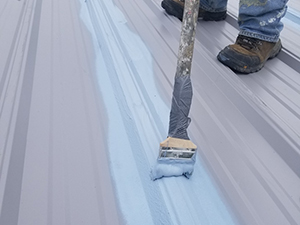
Metal roof restoration can be a practical alternative to replacement when the existing roof is still a sound candidate for repair and coating. The important question is not simply whether a coating can be applied, but whether the roof beneath it is dry, stable, compatible with the proposed system, and capable of remaining in service. For commercial property owners in Great Falls, MT, Flag Ship Foam & Coatings provides metal roof restoration services and can evaluate the roof before a scope is selected. Call 208-946-3031 to discuss the building and current roof condition.
Our metal roof restoration service overview explains more about work on an existing metal roof. You can also review our Great Falls roof coating article when comparing restoration and coating options.
Is Your Metal Roof a Restoration Candidate?

A restoration decision should start with the roof’s actual condition. The evaluation should identify problems that can be corrected as part of restoration and conditions that call for more extensive repair or replacement instead.
| Factor | What to Verify | Why It Matters |
|---|---|---|
| Moisture | Look for leak history, interior staining, wet insulation concerns, and other evidence that moisture may be trapped in the assembly. Additional testing may be appropriate when conditions are uncertain. | A coating should not be used to conceal an unresolved moisture problem. Wet or damaged materials may need to be addressed first. |
| Adhesion | Confirm that the existing metal, previous coatings, rust treatment, primer, and proposed restoration system can bond properly after preparation. | Poor adhesion can cause peeling, blistering, or early coating failure. |
| Substrate condition | Check panels, fasteners, seams, flashing, and corrosion to determine whether the metal remains serviceable. | Localized surface deterioration may be repairable, while severe corrosion, perforation, or weakened panels can change the project from restoration to repair or replacement. |
| Drainage | Identify low areas, blocked drainage paths, or recurring ponding that indicates water is not leaving the roof as intended. | A coating does not correct a slope or drainage defect. Those conditions need their own repair or design solution. |
| Compatibility | Verify that the existing roof surface and prior coatings are compatible with the proposed primer and restoration system. | Compatibility affects adhesion and whether the completed system can perform as intended. |
What the Restoration Process Should Address
Once the roof is confirmed as a viable candidate, the scope should explain the preparation and repairs needed before coating. That may include cleaning the roof, removing loose material, addressing rust, repairing problem seams or fasteners, and preparing flashing and other vulnerable details. The exact preparation method should match the existing roof and the restoration system rather than follow one universal formula.
Primer or other preparation products may be needed to support adhesion, depending on the metal surface and system specifications. The coating or restoration membrane should then be applied at the coverage and thickness required for that specific system. Instead of assuming every metal roof receives the same number of coats, the owner should ask the contractor to identify the proposed products, preparation steps, application requirements, and how completed coverage will be checked.
A clear written quote should distinguish restoration work from repairs that must happen first. If damaged panels, failed flashing, deteriorated fasteners, or other defects are outside the coating scope, those exclusions should be visible before work begins rather than discovered after the project is underway.
When Coating Is Not Enough
Restoration is not a substitute for correcting conditions that undermine the roof assembly. A coating does not dry saturated insulation, rebuild deteriorated decking, restore severely weakened metal, or correct a drainage design problem. If the evaluation identifies those issues, the appropriate scope may include targeted repairs, partial replacement, or a larger replacement project before or instead of coating.
This distinction matters because a roof can look like a coating candidate from the surface while still having conditions underneath that affect the decision. Leak history, repeated repairs, widespread corrosion, structural concerns, or evidence of trapped moisture should be resolved before the project is treated as a straightforward restoration.
Document the Finished Restoration
At project closeout, property owners should keep the proposal, approved changes, product information, photographs, and any warranty or maintenance documents that apply to the installed system. A final review should confirm that agreed repairs are complete, vulnerable details have been addressed, and the coating work matches the written scope.
Those records also make future maintenance easier. If a seam, fastener, or coated area changes later, the owner has a baseline for comparing the new condition with the completed work instead of starting without documentation.
Metal Roof Restoration in Great Falls, MT
When a metal roof remains structurally serviceable and its moisture, adhesion, corrosion, drainage, and compatibility conditions support restoration, coating can extend the useful life of the existing roof without a full tear-off. The amount of additional service life depends on the roof’s starting condition, the selected system, application quality, exposure, and ongoing maintenance.
Flag Ship Foam & Coatings provides commercial metal roof restoration in Great Falls, MT. Call 208-946-3031 to discuss whether restoration, repair, or replacement is the appropriate next step for the roof.
Frequently Asked Questions
How do I know if my metal roof can be restored instead of replaced?
The roof should be evaluated for moisture concerns, corrosion, panel condition, drainage, adhesion, and compatibility. Severe deterioration or unresolved underlying damage can make repair or replacement more appropriate.
Does metal roof restoration fix ponding water?
No. Coating does not correct an underlying slope or drainage problem, so recurring ponding should be evaluated and addressed separately.
What preparation happens before a metal roof is coated?
The scope may include cleaning, rust treatment, seam or fastener repairs, surface preparation, and primer where the selected system requires it. The exact steps depend on the existing roof and coating system.
How long can a restored metal roof remain in service?
There is no single lifespan for every project. Results depend on the roof’s original condition, repairs, selected restoration system, application, weather exposure, and ongoing maintenance.