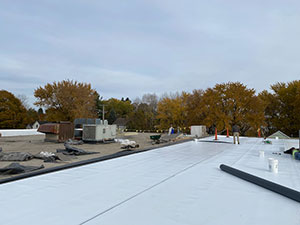
Before choosing single-ply roofing for a commercial building, it helps to understand how an installation is planned and checked. Flag Ship Foam & Coatings installs single-ply roofing systems on commercial, industrial and agricultural buildings in Whitefish, MT and across Montana and northern Idaho, with a reported 20 years in business.
This guide covers installation planning from start to closeout: the decisions that belong in the project before work begins and the checks that confirm the work was done as specified. For help choosing between membranes first, see our guide to single-ply roofing.
The Process of a Single-Ply Roofing Installation
An installation runs in a sequence, and each stage depends on the one before it. The table summarizes the decisions and acceptance checks at each stage. Actual inspection deliverables and testing methods should be stated in the contract rather than assumed from this general outline.
| Stage | Decisions to make | Acceptance check |
|---|---|---|
| Existing conditions | What is on the roof now, how many layers, and whether the roof can be recovered or must be torn off. | Written findings from the inspection, with moisture and drainage noted. |
| Substrate and structure | Deck type and condition, insulation condition, slope and any structural limits. | Damaged deck or wet insulation is repaired or replaced before the membrane goes down. |
| Material compatibility | Membrane type (TPO, EPDM or PVC), insulation, adhesives and any existing material that stays in place. | Products are confirmed as compatible and match the manufacturer’s requirements. |
| Attachment and flashing | Mechanical attachment or full adhesion, or ballast where the selected system and structure permit it; detail edges, curbs, drains, penetrations and walls. | Attachment pattern and flashing details are written into the scope and checked on the roof. |
| Access and weather | Crane or hoist access, staging, protection of occupied areas, and temperature and moisture limits during work. | A schedule with weather contingencies and a plan for keeping the building protected each day. |
| Inspection checkpoints | Points during the work for review, such as substrate readiness, seam work and flashing completion. | Checkpoints are recorded, ideally with photographs, before the next layer is installed. |
| Warranty scope | Which party warrants the workmanship, which covers materials or the system, and what each excludes. | The terms are provided in writing and reviewed before work starts. |
Initial Roof Inspection and Assessment
A project assessment starts by examining the existing roof to evaluate its condition. This may identify issues requiring attention before installation, such as damaged decking, wet insulation or insufficient drainage. A new membrane is only as sound as what lies beneath it, so these findings shape the scope, schedule and cost.
Preparing the Roof for Installation
Preparation depends on what is there. Existing roofing and debris may be removed to leave a clean, even surface, or, if the existing roof is sound and the manufacturer allows it, the new membrane may be installed over it. A recover can avoid some removal, but it is not suitable where wet or deteriorated materials cannot remain, where structural capacity is inadequate, or where applicable roof-layer restrictions or product requirements prohibit it. A moisture investigation, deck review, existing-layer count and written scope help decide between the two options. Inspection findings can also indicate that isolated materials need correction before installation, without automatically requiring total replacement.
For a commercial building, the estimate should specify whether roof drains, edge metal, rooftop-unit curbs or penetrations need to be raised, reset or reflashed for the new roof thickness. The proposal should distinguish known work from concealed conditions and identify how any additional work will be approved. These details matter for both waterproofing and the sequence of installation.
Installation of the Single-Ply Membrane

The membrane is the main waterproofing component of a system. Common choices include TPO, EPDM and PVC, and the specified assembly determines whether attachment is mechanical, fully adhered or, where appropriate, ballasted. TPO and PVC seams are generally joined by compatible hot-air welding; EPDM seam systems use approved primers, tapes or adhesives. The installed system determines fastening layout, insulation or cover-board requirements, perimeter securement and details at edges, curbs, drains and penetrations. Seams and transitions must be checked as carefully as the main roof field. Our single-ply roofing page for Moscow and TPO roof page for Whitefish describe how these systems are used in those areas.
Access, Weather and Protection
Planning for access and weather is part of the installation, particularly in a cold, variable climate. Materials need to reach the roof safely, occupied areas need protection from debris and noise, and adhesives, welding and sealants have temperature and moisture limits. A realistic schedule includes weather contingencies and a defined plan for temporarily protecting open roof areas at the end of each working day. Any equipment shutdowns, tenant access changes or delivery restrictions should be agreed with the property manager before mobilization.
Final Inspection and Maintenance Plan
When installation is complete, the contractor should review seams, flashings, penetrations, drainage and edge details against the written scope, documenting specified tests and correcting deficiencies. Closeout records can identify the installed membrane, insulation and attachment details, roof-area drawings or photographs where agreed, exclusions and pending items. A maintenance plan then sets out suitable periodic checks of drains, seams, flashings and rooftop traffic areas. Our roof inspection page for Kalispell describes what a useful inspection report contains.
Installation Planning Versus Repair and Replacement
This article is about planning a new single-ply installation. A roof that leaks or has failed raises different questions, namely where the water is entering, what damage has occurred and whether repair is practical. Those are repair and replacement diagnosis questions and are answered separately before an installation scope is set.
Installation acceptance should be evidence-based. The owner can compare the installed materials and roof-area scope with the proposal, ask what field quality checks were performed and note remaining corrections. Checks on seams, flashing and drains should follow the selected manufacturer system, not a single generic checklist for every membrane.
Written Warranty Scope
Before work starts, the owner should have the warranty terms in writing. A workmanship warranty is the contractor’s promise about the installation, while a manufacturer warranty covers the materials or system under conditions the manufacturer sets. Flag Ship describes system warranties of up to 20 years on certain systems. Availability and coverage are not universal: confirm whether materials, labor, leaks, maintenance, exclusions and notification requirements are included in the specific written agreement.
Single-Ply Roofing Experts
For commercial, industrial and agricultural buildings in Whitefish, MT and the surrounding region, Flag Ship can review a roof and discuss installation options. Call (208) 946-3031 or use the contact page.
Frequently Asked Questions
What decisions should be made before a single-ply installation starts?
The owner and contractor should settle the existing conditions, deck and insulation condition, membrane type, attachment method, flashing details, access and weather planning, inspection checkpoints and warranty terms.
Can a single-ply membrane go over an existing roof?
Sometimes. It depends on the existing layers, moisture in the insulation, deck condition and the manufacturer’s requirements. An investigation of moisture, deck condition, structural capacity, existing layers, applicable rules and the specified roofing system helps determine whether a recover is permitted.
How is the membrane attached?
Single-ply systems may be mechanically attached, fully adhered or, if permitted for the specified design, ballasted. Deck conditions, insulation, wind uplift, structural loads and manufacturer requirements control the choice.
What does a single-ply warranty cover?
It depends on the terms. A workmanship warranty comes from the contractor and a manufacturer warranty covers materials or the system. Flag Ship reports that some systems may carry warranties of up to 20 years; coverage and eligibility depend on the actual written agreement.