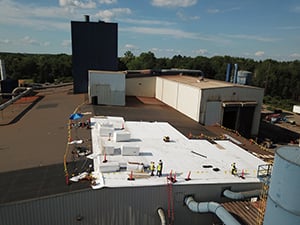
TPO roofing is a popular choice for commercial and industrial buildings because it offers durability, energy efficiency, and reliable protection in a wide range of weather conditions. In Post Falls, ID, roofing systems must withstand snowy winters, warm summers, and seasonal temperature fluctuations, making long-term performance an important consideration for property owners.
For more information, read our guide to single-Ply Roofers in Post Falls.
Flag Ship Foam & Coatings provides TPO roofing services for commercial and industrial properties in Post Falls, ID. Call (208) 946-3031 to learn more about roofing solutions designed for dependable protection and long-term value.
Understanding how TPO roofing performs in demanding conditions can help property owners select a roofing system that supports durability, efficiency, and long-term building protection.
What to Know Before Choosing TPO Roofing
Before choosing TPO roofing, it helps to know what it actually is. TPO stands for thermoplastic polyolefin, a single-ply membrane that comes in wide rolls and covers a flat roof in one flexible layer. It is usually white, it reflects sunlight, and its sheets are joined by heat rather than glue. Those three traits explain most of what the roof does.
TPO is also a system, not just a sheet. The membrane sits over insulation and a prepared deck, and the quality of the whole assembly decides how it performs. Choosing TPO really means choosing a membrane plus the crew and details that go with it.
How a TPO Roof Is Built

A TPO roof goes together in layers, from the deck up. First the deck is inspected and any damage repaired so the new roof has a sound base. Insulation board is then fastened or adhered over the deck to hit the target energy rating and even the surface. The membrane is rolled out over that, positioned, and secured.
The step that defines the roof is the seam. Where two sheets overlap, a hot-air welder melts them into a single piece, a bond stronger than the membrane itself when done right. Flashings at walls, drains, and rooftop penetrations are welded the same way. The result is a seamless surface with very few places for water to enter.
What Makes TPO Roofing Perform?
TPO roofing performs well because it handles heat and cold from the same sheet. The reflective white surface sends summer sun back instead of absorbing it, which keeps rooftop temperatures down and eases the cooling load inside. In winter it stays flexible instead of turning brittle, moving with the building as temperatures drop instead of cracking.
Durability comes from the membrane’s makeup and its welded seams. A polyester layer inside the sheet adds tensile strength and resists punctures from foot traffic and rooftop equipment. With sound installation and a little routine attention, a TPO roof commonly performs for two to three decades, with membrane thickness and seam quality deciding where it lands in that range.
Is TPO Roofing the Right Fit for Post Falls Buildings?
TPO is a strong fit for most flat-roofed commercial, industrial, and agricultural buildings in the Post Falls area, with one nuance worth understanding. The reflective surface that saves on cooling in July does little for you in January, when the goal is keeping heat in. In a climate with this many cold months, the insulation under the membrane does more for your energy bill than the color on top of it.
That does not argue against TPO. It argues for treating the membrane and the insulation as one decision. A well-insulated TPO assembly handles Idaho’s snowy winters and dry summers, and sheds water through freeze-thaw swings. For most local buildings, it is a practical, long-lasting choice when the system is specified correctly.
Choosing TPO Roofing with Confidence
TPO roofing is a long-term roofing solution that can provide dependable protection, energy efficiency, and durability when properly designed and installed for the specific needs of a building. Factors such as membrane selection, insulation design, and installation quality all play an important role in how the roofing system performs over time.
Flag Ship Foam & Coatings provides TPO roofing services for commercial and industrial properties in Post Falls, ID. Call (208) 946-3031 to discuss roofing solutions designed around your building’s requirements and long-term goals.
Understanding how TPO roofing systems are designed and how they perform can help property owners make informed decisions that support long-term building protection and value.
FAQ
What is TPO roofing and how is it different from other flat roof membranes?
TPO is a single-ply membrane with heat-welded seams and a reflective surface. Unlike EPDM, a black rubber membrane joined by adhesive, TPO reflects more heat and welds into a continuous surface.
How long does a TPO roof last on a commercial building?
Most TPO roofs last two to three decades. Membrane thickness, seam quality, and maintenance decide where a given roof falls in that range.
Is TPO roofing a good choice for the Post Falls climate?
Yes. TPO stays flexible through cold winters and reflects heat in summer. It also handles the freeze-thaw swings and temperature extremes in Idaho.