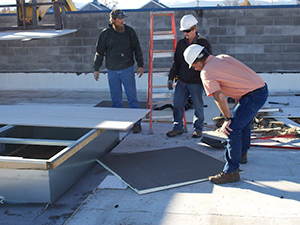
TPO, short for thermoplastic polyolefin, is a single-ply roofing membrane used on many commercial and industrial buildings with flat or low-slope roofs. Its seams are typically heat-welded, and it is usually installed in a reflective color. Whether TPO is the right membrane for a particular roof depends on the roof’s condition and use, not on a list of benefits. Flag Ship Foam & Coatings has 20 years in business and works on commercial, industrial and agricultural roofs across Montana and northern Idaho, including TPO and other single-ply systems for building owners in Moscow, ID and the surrounding region. To discuss a roof, call (208) 946-3031.
This guide explains how to assess TPO for a building, what the contractor should confirm, and which of the common upsides need qualifying. The project-specific installation scope should be based on the roof rather than assuming that a nearby building used an equivalent assembly.
How to Assess a TPO Roof for Your Building
Use the matrix below to check the points that decide whether TPO fits. A contractor should be able to speak to each one for your roof.
| Factor | What to check | How it affects a TPO decision |
|---|---|---|
| Substrate condition | Deck type and soundness, existing roof layers, and whether insulation is dry | New membrane does not correct unsound decking or confirmed wet insulation; define necessary remedial work |
| Drainage | Slope, drain locations, ponding after rain | Persistent ponding warrants a drainage review and may affect the proposed assembly, maintenance and warranty conditions |
| Attachment | Mechanically attached or fully adhered; ballast only where specifically approved | The deck, wind exposure, insulation and structural load decide which method is practical |
| Insulation | Type, thickness, condition and any required cover board | TPO sits over the insulation, so compatibility and condition affect the whole assembly |
| Rooftop activity | Foot traffic, service visits, exhaust discharge and equipment | Repeated traffic may require walkway protection, and chemical or grease exposure requires product-specific compatibility assessment |
| Detailing | Curbs, penetrations, drains, parapets and edges | Edges, curbs and penetrations are vulnerable locations; each needs the specified compatible flashing and termination |
| Service access | How crews and materials reach the roof and whether the building stays occupied | Access and operations affect scheduling and the attachment method |
What the Contractor Must Confirm
| Topic | What to confirm with the contractor |
|---|---|
| Seams | TPO seams are typically heat-welded, and the contractor should explain how seams are welded and checked using the specified manufacturer procedure |
| Repairs | Repairs generally use compatible TPO patches and hot-air welding after surface preparation; confirm the aged membrane is weldable and what to do if it is not |
| Thickness and system | The manufacturer, membrane product and thickness, reinforcement, approved assembly and warranty terms, if offered, stated in writing |
| Compatibility | Compatibility of the membrane with adjacent materials, insulation and any coating or sealant used |
An inspection before any membrane decision helps answer these questions. For a separate local inspection discussion, see the roof inspection guide for Moscow.
Upsides of TPO Roof

The commercial membrane-roofing service includes TPO and other single-ply systems. TPO is one option for commercial and industrial low-slope buildings. These are the usual upsides, along with the conditions that apply to each.
- Installation options: TPO may be mechanically attached or fully adhered; only some manufacturer-approved assemblies permit ballast. The deck, insulation, wind exposure and structural load capacity determine which attachment method is suitable. Ask for the specific approved assembly rather than treating these methods as interchangeable.
- Maintenance: Like any roof, TPO benefits from regular inspections and prompt repair of damage. Seams, flashings and drains are the usual areas to check, and the maintenance needed varies with the roof and its use.
- Durability: TPO formulations are designed for exterior weather exposure, but puncture resistance, chemical compatibility and aging characteristics vary by product. Actual service life depends on the formulation, thickness, installation quality, detailing, exposure and care, so no single lifespan applies to every roof.
- Cost: TPO is often priced competitively among single-ply options, but total cost depends on thickness, attachment, insulation, roof size and repairs needed first. Compare written scopes before comparing prices.
- Welded seams: Heat-welded seams can form strong, watertight bonds when welded correctly on clean material. Seam quality depends on workmanship and conditions, which is why seam checks belong in the scope.
- Reflectivity: A reflective surface can reduce heat absorbed by the roof, which may lower cooling demand in warm weather. How much that affects energy bills depends on the building, insulation, climate and use, so savings are possible but not guaranteed.
Where TPO Needs Extra Care
TPO is not a fit for every roof. Determine whether the existing membrane will be removed or whether the manufacturer and applicable codes permit a recover. A recover may be inappropriate if moisture testing identifies saturated insulation, the deck cannot carry the new assembly, or attachment cannot be verified. A roof with persistent ponding, a damaged deck or wet insulation may need other work before any membrane is installed. Heavy rooftop contamination from oils or grease can complicate welding and surface performance. In cold climates such as northern Idaho and Montana, installation has temperature and moisture limits, so scheduling should account for weather. Where an existing roof is dry and sound, a compatible restoration system may be an alternative if evaluation establishes its suitability. Do not assume coatings are compatible with all TPO formulations. For an occupied building, ask how roof openings, equipment service access, noise, debris and temporary watertightness will be managed during work.
Discussing TPO Roofing for Your Building
For commercial and industrial properties in Moscow, ID and the surrounding region, Flag Ship Foam & Coatings can review a roof and discuss whether TPO suits it. Call (208) 946-3031 or use the contact page. Ask which manufacturer or contractor warranty, if any, applies to the proposed roof assembly and what its written exclusions and maintenance obligations are.
Frequently Asked Questions
What does TPO stand for, and how is it installed?
TPO stands for thermoplastic polyolefin. Approved assemblies may be mechanically attached or fully adhered; ballast is an option only where the specific system, structural capacity and design permit it.
How are TPO seams made and repaired?
Seams are typically heat-welded, and repairs generally use compatible TPO material and welding. The existing surface needs to be clean enough to weld.
Will a TPO roof lower my energy costs?
A reflective surface can reduce heat gain, but savings depend on the building, insulation, climate and use, so they are not guaranteed.
Can TPO be installed over an existing roof?
Sometimes, depending on the existing layers, moisture in the insulation and manufacturer requirements. Existing layers, deck condition, moisture testing, applicable code and manufacturer assembly requirements determine whether a recover is suitable.