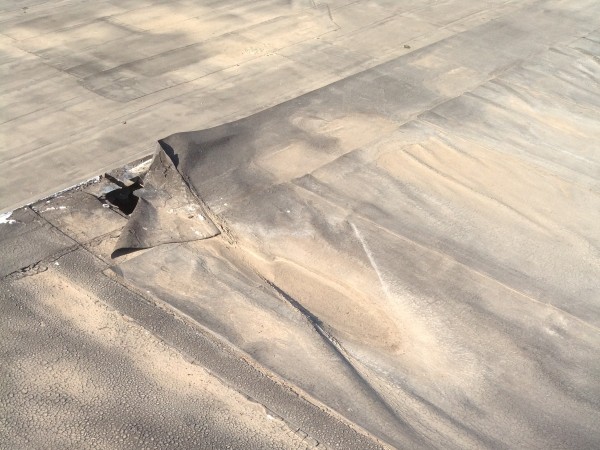
Roof maintenance for a commercial flat roof in Coeur d’Alene centers on repeatable checks that match the roof system, current condition, drainage, rooftop activity, repair history, and weather exposure: keep drainage paths clear, inspect vulnerable details, document conditions, and address localized defects within the maintenance scope. Flag Ship Foam & Coatings provides repair, maintenance and inspection across flat roof types for commercial, industrial and agricultural properties in Coeur d’Alene and the rest of northern Idaho and Montana.
Maintenance has a limit. It can support a roof that remains serviceable, but it does not correct widespread membrane deterioration, broad moisture problems, structural concerns, or other conditions that require repair, restoration, or replacement. The sections below describe a practical seasonal routine and the findings that should move an owner from maintenance to repair, coating or a larger scope.
A Seasonal Maintenance Routine for Coeur d’Alene Flat Roofs

North Idaho roofs can be exposed to snow, ice, temperature changes, wind, rain, and summer sun. Seasonal timing can be useful, but the actual inspection and maintenance schedule should follow the roof condition, system, repair history, rooftop activity, and any written manufacturer or warranty requirements.
- After winter conditions: review drainage, flashings, seams, penetrations, and other areas where snow, ice, or temperature changes may have affected the roof.
- During routine warm-weather access: review the membrane or coating surface, seams, penetrations, and areas around rooftop equipment where service traffic is concentrated.
- Before winter conditions: remove debris where needed, confirm drainage paths are open, document roof conditions, and address repair items that should not remain exposed through winter.
- After a significant event: consider an additional inspection when severe weather, rooftop work, or another event gives a specific reason to suspect damage.
Roof access is a safety issue. Owners and facility staff should not walk a roof without appropriate access, training, and fall protection. Building staff can document interior symptoms and maintenance records while trained roofing personnel handle roof-level inspection and repair.
What a Maintenance Check Should Cover
- Drainage: drains, scuppers, and gutters clear enough to function, with visible drainage conditions documented.
- Flashings and terminations: reviewed for open joints, movement, deterioration, or failed transitions where the roof meets walls, curbs, and parapets.
- Penetrations: vents, pipes, skylights, and equipment supports reviewed for condition, attachment, and compatible flashing details.
- Seams and laps: reviewed for openings, lifting, separation, or other visible defects.
- Membrane or coating surface: reviewed for cracking, chalking, blistering, punctures, worn areas, or other visible deterioration.
- Rooftop equipment: conditions around service areas, penetrations, supports, and condensate drainage that may affect the roof.
- Interior signs: ceiling stains, dampness or odor reported by occupants.
When Maintenance Is Enough and When It Is Not
The table below pairs common findings with the usual maintenance response and the sign that a bigger step is needed.
| What you find | Routine maintenance response | Signal that maintenance is no longer enough |
|---|---|---|
| Leaves, needles, dirt or standing debris near drains and scuppers | Clear debris within the maintenance scope and document whether drainage improves | Recurring standing water remains after outlets are clear, indicating a drainage, slope, or low-area condition that needs further evaluation |
| Sealant that is cracked, hardened or pulling away at flashings and penetrations | Evaluate the failed sealant or flashing detail and use a compatible repair method where localized maintenance is appropriate | The same detail repeatedly fails, or the flashing assembly is loose, deteriorated, or outside a reliable maintenance scope |
| Small punctures or scuffs near rooftop equipment | Use a compatible localized repair where the surrounding membrane remains suitable | Damage is recurring or widespread near service routes, suggesting a broader repair or traffic-protection scope |
| Membrane that looks chalky, dull, cracked or worn through the surface layer | Document the condition and evaluate whether it remains suitable for monitoring or needs repair | Wear is widespread enough to justify comparing repair, coating, restoration, or replacement rather than continued spot maintenance |
| Ceiling stains or dampness inside | Investigate the likely source and surrounding roof condition before setting a repair scope | Multiple leak areas or moisture findings show that the condition extends beyond a localized maintenance item |
| Blistering or open seams | Document the location and condition and determine whether a compatible repair is needed | Open seams across a broad area indicate a repair or broader corrective scope beyond routine maintenance |
Small, isolated defects may be handled as flat roof repair or flat roof caulking at the affected detail. When wear is spread across the roof surface but moisture, adhesion, drainage, and substrate conditions still support restoration, a flat roof coating or commercial roof restoration may be worth reviewing. Coating suitability depends on moisture, substrate and deck condition, adhesion, drainage, compatibility, and required preparation, so broad moisture or structural problems can change the scope.
Keeping Records That Make Decisions Easier
A simple file for each roof gives owners a clearer record for future maintenance, repair, restoration, and replacement decisions. Keep dated photos of drains, penetrations and any problem areas, notes on leaks and what was done about them, and copies of inspection reports and repair invoices. When the same condition appears repeatedly, the history can show that a localized maintenance response is not resolving the underlying issue and that a repair or broader scope should be evaluated. If a warranty applies, rely on the actual written document for inspection, maintenance, documentation, and approved-repair requirements.
Roof Maintenance Help in Coeur d’Alene, ID
Flag Ship Foam & Coatings has been in business for 20 years and works across acrylic and silicone coatings and restoration, single-ply systems, spray foam and general commercial roofing. To talk through the condition of a flat roof in Coeur d’Alene, call (208) 946-3031 or use the contact page.
Frequently Asked Questions
How often should a commercial flat roof be maintained?
There is no single interval for every commercial roof. Timing should reflect the roof system, condition, repair history, drainage, rooftop traffic, weather exposure, and any written maintenance or warranty requirements.
What is the most common maintenance problem on flat roofs?
Maintenance findings often involve drainage, flashing, seams, penetrations, surface wear, rooftop traffic areas, or prior repair locations. The actual priority depends on the roof’s condition.
Can regular maintenance replace a roof coating or restoration?
No. Maintenance can address routine conditions and some localized defects, but widespread deterioration, broad moisture, or recurring failures can require repair, coating, restoration, or replacement.
Should I remove snow from my flat roof?
Snow removal can create safety and membrane-damage risks if it is done without the right methods. When accumulation or structural loading is a concern, use qualified personnel and follow the building’s structural and roof-system requirements.