A full tear-off is a major disruption for an occupied commercial building, and in many cases it is more roof work than the building needs. For Belgrade, MT property owners whose roof still has a sound deck and dry insulation, commercial roof restoration can extend the life of the existing roof by repairing it and covering it with a new seamless coating system. Flag Ship Foam & Coatings has 20 years in business and works on commercial, industrial and agricultural roofs across Montana and northern Idaho. The question that decides everything is whether your roof is a sound candidate, and the sections below explain how that is judged.
Restoration is not the right answer for every roof. If the roof is wet underneath, the decking has deteriorated, or water ponds in the same places after every storm, coating over it will not fix the cause. To discuss an assessment of your building, call (208) 946-3031. For related reading, see our guides to metal roof restoration in Belgrade, TPO roofing in Belgrade and commercial roofing companies in Belgrade.
When Is Commercial Roof Restoration the Better Call?
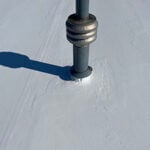
Restoration works on top of the existing roof. The crew cleans and prepares the surface, repairs failed seams, flashings and problem areas, and then applies the restoration system over what is already there. Because much of the existing assembly stays in place, a suitable restoration can limit the exposure associated with removing roof materials. Noise is generally lower than a tear-off, parking is usually easier to keep open, and tenants and staff can often keep working while the roof is done.
A tear-off is different. Old material is removed down to the deck, debris has to be lowered to the ground, and the deck is exposed until new material is installed. Temporary protection helps, but Belgrade’s changeable spring and fall weather makes that exposure a genuine risk for the interior. For a building where downtime, inventory, equipment or occupants are a concern, avoiding that exposure can be a large part of the decision.
Which Commercial Buildings Are Good Restoration Candidates?
Many commercial buildings in the Belgrade area can be restored, but the roof has to meet certain conditions first. The buildings that tend to benefit most share a few traits:
- Occupied buildings where operational disruption carries a real cost
- Agricultural, light industrial or food processing facilities where interior exposure to weather or debris is a problem
- Roofs that still have structural integrity but show age-related membrane wear, seam separation or early UV degradation
- Buildings where the owner wants to extend roof life without the scope and timeline of full replacement
The deciding factor is the condition under the surface. A restoration candidate has a sound deck, insulation that is dry, and a membrane that is still bonded and can accept a new system after cleaning and repair. If those conditions hold, restoration is worth a serious look before replacement is put on the table.
When Coating Is Not Appropriate
A restoration system protects and seals the surface of a roof. It does not repair what is wrong beneath it. Coating is generally not appropriate, or at least not by itself, in these situations:
- Ponding water: standing water that remains after rain points to a drainage or slope problem. Coating does not change the shape of the roof, and prolonged ponding can shorten the life of many coatings.
- Rotted or damaged decking: a coating cannot restore a deck that no longer holds fasteners or supports foot traffic. Those sections need repair or replacement first.
- Saturated insulation: wet insulation holds moisture against the deck and will not dry under a new coating. The affected areas need to be found and removed.
- A membrane that will not bond: if the existing surface cannot be cleaned and prepared to accept the new system, the coating can fail early.
Moisture surveys, core samples and a close visual review are the usual ways to confirm what is under the surface. A stain on a ceiling alone does not show how far moisture has spread across the roof, so a proper assessment looks at the roof itself.
Restoration, Repair or Replacement: How the Options Compare
| Option | Typical roof condition | What the work involves | Main limit |
|---|---|---|---|
| Spot repair | Isolated leaks, a few failed seams or flashings, otherwise sound roof | Patching or resealing the specific defects | Does not address general aging of the membrane |
| Restoration | Widespread wear or UV aging, but dry insulation and a sound deck | Cleaning, repairs, then a seamless coating system over the existing roof | Cannot fix ponding, rotten decking or wet insulation |
| Replacement | Saturated insulation, damaged deck, or a roof past the point of repair | Removing failed material and installing a new roof system | More disruption, more debris and a longer schedule |
What a Restoration Project Looks Like

A restoration project follows a consistent order. Preparation comes first: the roof is cleaned so the new system can bond, and loose or failed material is removed. Repairs follow, including seams, flashings, penetrations and any areas found to be damaged. The compatible restoration system is then applied over the prepared surfaces, including specified reinforcement and detailing at seams and penetrations. This is especially helpful on Belgrade buildings with multiple penetrations, complex geometry or irregular roof areas.
Before the project is closed out, the finished roof should be reviewed against what was agreed, and follow-up inspections should be planned. Any available warranty depends on the specified system and its written terms, which should be reviewed before approving the work. Many restoration systems can also be recoated later to renew coverage, which is an option a replacement membrane does not offer in the same way.
Timeline and Montana Weather
Montana’s exterior roofing season is shorter than in many states. Cold temperatures and early snowfall in the fall narrow the window for coatings, which need suitable temperatures and dry surfaces to cure properly. Restoration can take less time than a tear-off when extensive deck work is unnecessary, although the schedule depends on roof size, preparation, repairs and weather. Planning the project early in the season gives the crew room for weather delays instead of pushing the work into late fall.
Keep Your Building Running During Restoration
For Belgrade, MT owners who need a better roof without shutting down operations, restoration is often worth a careful look. Flag Ship Foam & Coatings restores commercial and industrial roofs across Montana and northern Idaho, and a first step is an assessment of whether your roof qualifies. Call (208) 946-3031 to ask about your building.
Frequently Asked Questions
How long does commercial roof restoration last?
It depends on the roof system, the condition of the existing roof and how it is maintained. Service life varies with roof condition, system selection, installation and upkeep. Some systems can be evaluated for a later recoat, subject to their condition and manufacturer requirements.
Can a commercial roof be restored in sections?
Yes, larger roofs can often be restored in phases to fit operating schedules or budget cycles. Each phase still needs the same preparation and repairs so the finished system performs as one continuous surface.
Does roof restoration add significant weight to the building?
Restoration systems generally add much less weight than a tear-off and re-roof that adds new layers. Buildings with structural load concerns should still have the roof assessed before work begins.
What types of commercial roofs can be restored?
Many flat, low-slope and metal roofs can be restored when the deck is sound, the insulation is dry and the existing surface can be cleaned and prepared. A roof assessment confirms whether a specific building qualifies.