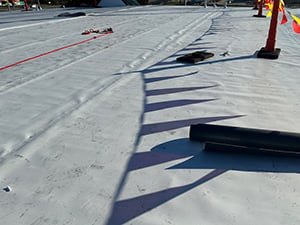
Single-ply roofing in Sandpoint, ID should be selected around the building, not around a headline benefit. Substrate condition, drainage, insulation, attachment, rooftop activity, detailing, service access, and future repair compatibility all affect whether a membrane system fits the project.
Flag Ship Foam & Coatings installs and services commercial single-ply roofing in northern Idaho. For a Sandpoint property, the useful first step is to confirm what the existing roof can support, which membrane is being proposed, how it will be attached and seamed, and what maintenance or repair considerations come with that system.
How to Assess a Single-Ply System for Your Building
TPO, PVC, and EPDM can all be used on commercial low-slope roofs, but they do not use identical seam, attachment, or repair methods. The table below focuses on the building conditions a contractor should confirm before system selection.
| Factor | What to confirm |
|---|---|
| Substrate condition | Whether the deck, cover board, and materials that will remain are dry, sound, and suitable for the proposed assembly. |
| Drainage | How water reaches drains or edges and whether ponding, blocked drainage, or slope problems need separate correction. |
| Attachment | Whether the membrane will be mechanically attached or adhered, and how the method fits the deck, wind design, and selected system. |
| Insulation | The insulation type, thickness, condition, and compatibility with the complete roof assembly. |
| Rooftop activity | Where technicians will walk to service HVAC units and other equipment, and where traffic protection may be appropriate. |
| Detailing | How drains, curbs, penetrations, walls, edges, and transitions will be flashed within the selected system. |
| Service access | How future maintenance teams will reach equipment and repair areas without creating unnecessary membrane damage. |
Seam and Repair Compatibility Matter
TPO and PVC commonly use heat-welded seams, while EPDM commonly uses compatible tapes, adhesives, and flashing products. Those differences matter during both installation and future repair work. A contractor should identify the membrane type, seam method, approved accessories, and repair materials that belong with the selected system.
A later patch should not be treated as interchangeable across membrane types. Surface preparation, primer, tape, flashing, welding, and sealant requirements vary by system and condition. If an existing membrane is being repaired or tied into, the contractor should confirm what material is present before selecting the repair method.
The Importance of Proper Seaming and Fastening

Single-ply systems rely on the membrane field, seams, edges, penetrations, and attachment working together. Poor seam preparation or incomplete welding can create leak paths. Incorrect attachment can contribute to movement or wind-related problems. The exact requirements should follow the selected roofing system and project specifications rather than a generic fastener count or one installation method for every roof.
For thermoplastic membranes such as TPO and PVC, seam quality depends on appropriate preparation, equipment settings, weather conditions, and installer technique. For EPDM, seam and flashing work depends on compatible primers, tapes, adhesives, and prepared surfaces. The contractor should also explain how completed seams and details will be checked before closeout.
Closeout documentation should make future service easier. Ask for the installed membrane type, major accessory or flashing details, repair limitations, and any maintenance instructions supplied with the system. If rooftop equipment is added or moved later, that record gives the next contractor a clearer starting point for compatible flashing and repair work instead of forcing them to identify the roof assembly from scratch.
Compare the System With the Building, Not Just the Membrane Name
Reflective membranes can reduce solar heat absorbed at the roof surface, but actual building energy use also depends on insulation, HVAC performance, air leakage, occupancy, weather, and operating conditions. Likewise, durability depends on the complete assembly, drainage, detailing, rooftop traffic, installation quality, and maintenance rather than the membrane name alone.
Flag Ship’s TPO restoration guidance for Sandpoint is useful when the building already has a TPO roof and the question is whether that existing system can remain in service. For broader contractor-scope questions, the company’s commercial roofing contractor guidance provides a separate comparison point. A related single-ply roofing article offers additional system context without changing this page’s Sandpoint selection focus.
Single-Ply Roofing in Sandpoint, ID
A useful single-ply proposal should identify the membrane system, substrate assumptions, insulation, attachment, seam method, drainage conditions, detailing, traffic protection, exclusions, and repair compatibility. Those items give the owner a stronger basis for evaluating fit than broad claims about lifespan, savings, or maintenance.
Contact Flag Ship Foam & Coatings at 208-946-3031 to discuss single-ply roofing for a commercial property in Sandpoint, ID.
Frequently Asked Questions
What types of single-ply roofing membranes are commonly used?
TPO, PVC, and EPDM are common commercial single-ply membranes. The better fit depends on the building, roof assembly, attachment, detailing, maintenance needs, and project requirements.
Can a single-ply membrane be repaired later?
Often, yes. The repair method should match the existing membrane and use compatible preparation, flashing, tape, adhesive, welding, or other system-specific materials.
How do weather conditions affect single-ply installation?
Temperature, moisture, wind, and surface conditions can affect adhesives, welding, material handling, and cure requirements. Installation should follow the selected system’s requirements for actual site conditions.
Are single-ply roofs energy-efficient?
Some membranes use reflective surfaces that can reduce roof-surface heat absorption, but actual energy performance depends on the full roof and building system rather than the membrane alone.