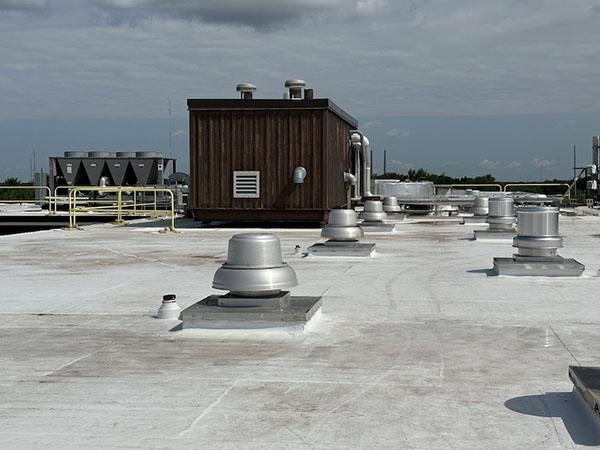
A commercial roof inspection gives a Hayden, ID property owner a clearer view of the roof’s current condition before visible interior damage becomes the first sign of trouble. For a flat or low-slope roof, an inspection can help identify conditions that deserve maintenance, repair, further investigation, or continued monitoring. Flag Ship Foam & Coatings confirms commercial roof inspection within its general commercial roofing scope and serves Hayden as part of its northern Idaho service area.
Property owners can call (208) 946-3031 to discuss a commercial roof inspection for a Hayden building.
What a Commercial Roof Inspection May Cover
The inspection scope depends on the building and roof system, but a professional review can include the visible roof surface, seams, flashing, penetrations, roof edges, drainage areas, rooftop equipment transitions, and other accessible components that affect roof performance.
The purpose is not to assume that every visible defect is urgent or that every roof needs the same repair. The value comes from comparing the observed conditions with the roof system, age, maintenance history, known leaks, previous repairs, and the owner’s current concerns.
Drainage Conditions Deserve Attention

Low-slope commercial roofs depend on effective drainage. During an inspection, drains, scuppers, gutters, and areas where water tends to collect can provide useful information about how runoff is moving across the roof.
Ponding water does not point to one automatic cause. Slope, settlement, blocked outlets, debris, drainage layout, or other conditions can contribute. If drainage concerns are found, the appropriate next step should be based on the building rather than assuming a coating, repair, or replacement will solve the issue by itself.
Seams, Flashing, and Penetrations Should Be Reviewed in Context
Single-ply roofs, spray foam systems, and coated roofs all include transitions where one part of the roofing assembly meets another. Seams, flashing, curbs, vents, drains, roof edges, and equipment penetrations can all be reviewed for visible deterioration or damage.
Those areas should not automatically be labeled as leak sources simply because they are transitions. Moisture can travel, and the visible condition at the roof surface may not identify the complete path of a leak. If hidden moisture or subsurface damage is suspected, additional investigation may be appropriate.
Interior Signs Can Add Useful Context
Information from inside the building can help the contractor understand reported symptoms. Ceiling stains, active drips, damaged finishes, or recurring wet areas may help narrow the investigation, but they do not by themselves identify the exact roof defect above them.
Property managers can provide known leak locations, recent repair history, equipment work, drainage concerns, or other building changes before the inspection. That context can help the roof review focus on the right areas without requiring untrained building staff to access the roof themselves.
How Often Should a Commercial Roof Be Inspected?
There is no single inspection schedule that fits every commercial property. Roof age, system type, exposure, maintenance history, weather events, building use, known problem areas, and any written project or warranty requirements can all affect when another inspection makes sense.
A roof may also deserve attention after a significant event if the owner has reason to suspect damage. The need for a post-storm inspection should reflect actual site conditions rather than a fixed rule that every storm requires the same response.
Use the Findings to Plan the Next Step
An inspection does not automatically mean the roof needs repair, coating, restoration, or replacement. Its value is in helping the owner understand what was observed and what decisions may need to follow.
If documentation is provided, review it alongside any proposal so the recommended work connects clearly to the roof conditions. Report format can vary by project, so property owners should confirm what documentation, photographs, testing, or priority recommendations are included rather than assuming every inspection provides the same package.
Inspection Findings Can Support Maintenance Planning
A dated record of roof conditions can help a property owner compare changes over time, especially when the same areas are reviewed during later maintenance or inspection work. That can be useful for budgeting, planning repairs, or deciding when a broader roofing discussion is appropriate.
Flag Ship Foam & Coatings also provides approved commercial services that include acrylic and silicone coatings and restoration, TPO, PVC, and EPDM single-ply installation, spray foam installation, and general commercial roofing. The right next step should come from the building’s actual condition, not from assuming one service fits every roof.
Commercial Roof Inspection in Hayden, ID
Flag Ship Foam & Coatings has been in business for 20 years and serves commercial, industrial, and agricultural properties throughout Montana and northern Idaho. Hayden is included in the company’s approved service area.
Property owners looking for broader information about available services can review commercial roofing services. Owners comparing restoration options can also review the company’s information about flat roof coatings. For a Hayden property, contact Flag Ship Foam & Coatings at (208) 946-3031 to discuss an inspection.
Frequently Asked Questions
What areas are usually reviewed during a commercial roof inspection?
Visible roof surfaces, seams, flashing, penetrations, roof edges, drainage areas, and other accessible components may be reviewed depending on the roof system and inspection scope.
How often should a commercial roof be inspected?
There is no universal schedule. Timing should reflect roof age, system type, exposure, known issues, maintenance history, significant weather events, and applicable project documentation.
Does an inspection automatically mean I need roof repairs?
No. An inspection may identify conditions that need repair, maintenance, further investigation, monitoring, restoration discussion, or no immediate action.
Will I receive a written inspection report?
Documentation can vary by project. Confirm in advance whether the inspection includes a written report, photographs, testing, recommendations, or another form of closeout documentation.