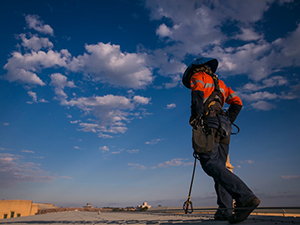
A commercial roof inspection should leave a building owner with more than a verbal opinion. For a property in Bozeman, MT, the useful result is a written record showing what was inspected, where concerns were found, what is confirmed, what still needs investigation, and which items belong in maintenance, repair, restoration, or replacement planning.
Flag Ship Foam & Coatings provides commercial roofing services across Montana and northern Idaho. Call (208) 946-3031 to discuss a roof concern and the information you want documented during the inspection.
What a Detailed Roof Inspection Report Should Include
A useful report should connect roof conditions to specific locations and recommended next steps. Depending on the roof system and reason for the inspection, the report should include:
- Dated photos: Images tied to the roof area or defect being discussed so the condition can be located again during repair or reinspection.
- Defect locations: Clear roof-zone references, marked areas, or written descriptions for seams, flashing, penetrations, drains, membrane damage, or other concerns.
- Moisture findings and limitations: A distinction between confirmed moisture evidence and areas that only warrant additional investigation.
- Prioritized actions: Items that need prompt attention, items that can be scheduled into planned maintenance, and conditions that should be monitored.
- Reinspection triggers: A future date, significant weather event, recurring leak, repaired area that changes again, or another condition that should prompt follow-up.
The report should go to the building owner or facility manager rather than remain only in the contractor’s notes. That gives the owner a record that can be compared with later repair proposals, maintenance visits, and future inspections.
When Thermal Findings Need Confirmation
If thermal imaging is used, temperature patterns should be treated as screening evidence rather than proof of trapped moisture. Roof surface material, weather, solar exposure, insulation, and inspection timing can all affect what a thermal scan shows.
When a repair or replacement decision depends on a thermal anomaly, the suspected area should be confirmed with an appropriate follow-up method before the finding is treated as established moisture damage. The report should identify what testing was used, what it showed, and any limitation that still applies.
How Inspection Findings Should Guide the Next Step

One inspection can lead to different recommendations depending on what the evidence shows. A contained seam, flashing, or puncture defect may support a localized repair when the surrounding roof remains serviceable. Flag Ship’s flat roof repair information for Bozeman provides additional context on repair decisions.
Restoration may be worth evaluating when the roof remains a suitable candidate and the problem is broader than one small repair but does not require full replacement. Replacement deserves consideration when deterioration, moisture, substrate damage, or repeated failures are too extensive for a practical repair or restoration scope.
The report should explain why a recommendation follows from the documented condition. It should not assume that every aging roof needs replacement or that every visible defect can be solved with a small patch.
From the Inspection Report to a Scoped Estimate
A repair or replacement estimate should refer back to the inspection findings. The scope should identify the roof area, documented defect or condition, proposed materials or method, preparation, flashing or penetration work, cleanup, exclusions, and conditions that could change the price or scope.
If the inspection leaves uncertainty about moisture extent or concealed deterioration, the estimate should say so. That makes it easier to compare proposals and understand whether two contractors are pricing the same work or making different assumptions.
For another example of commercial inspection issues, Flag Ship’s commercial roof inspection article for Post Falls discusses seams, flashing, drainage, and the value of documenting roof condition before problems become more extensive.
When Should the Roof Be Inspected Again?
There is no single inspection interval that fits every commercial roof. Timing should reflect the roof system, age, condition, repair history, warranty or maintenance requirements, weather exposure, and recent events such as a major storm or recurring leak.
The current report should give the owner a practical trigger for the next visit. A stable roof may follow a routine maintenance schedule, while a monitored condition, recent repair, or new symptom may justify an earlier inspection.
Roof Inspection in Bozeman, MT
A useful roof inspection gives the owner evidence that can support the next decision. Ask for dated photos, located findings, moisture-testing limitations, priorities, reinspection triggers, and a clear explanation of how the findings connect to any proposed maintenance, repair, restoration, or replacement work.
To discuss a commercial roof inspection for a Bozeman property, call Flag Ship Foam & Coatings at (208) 946-3031.
Frequently Asked Questions
What should I do with my roof inspection report?
Keep it with the building’s roof records and use it to compare maintenance or repair proposals, track recurring conditions, and provide context for future inspections.
Do thermal imaging results prove that insulation is wet?
No. Thermal patterns can identify areas that deserve closer investigation, but a major repair decision may require confirmation with another appropriate method.
Who should receive the completed inspection report?
The building owner or facility manager should receive the written findings so they can use them for maintenance planning, budgeting, and contractor scope comparisons.
How often should a commercial roof be inspected?
The schedule should reflect roof type, condition, warranty or maintenance requirements, weather exposure, repair history, and recent events rather than one fixed interval for every building.