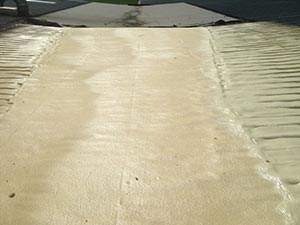
Commercial buildings in Post Falls experience changing weather throughout the year, from heavy winter snowfall to spring moisture and warm summer sun. These conditions make regular roof maintenance essential to protecting a spray polyurethane foam roofing system over the long term. Spray foam roofing offers excellent durability and insulation, but its lifespan depends on consistent care and timely maintenance.
For more information, read our guide to roof Coating in Post Falls.
Call Flag Ship Foam and Coatings at (208) 946-3031 for spray foam roofing in Post Falls, ID.
Spray Foam Roofing Depends on a Healthy Topcoat
A spray polyurethane foam roof is covered with a protective coating that shields the foam from ultraviolet light, weather, and everyday wear. While the foam itself provides insulation and forms a seamless roofing surface, the coating serves as the first line of defense against the elements.

Over time, sunlight gradually wears away the topcoat. As the coating wears thinner, the foam beneath becomes more vulnerable to moisture and physical damage. Regular inspections help determine when the coating has reached the point where recoating is recommended. Property owners may notice fading, surface erosion, or exposed foam in isolated areas, all of which indicate that the protective layer is wearing down.
Recoating restores the weather-resistant surface without removing the existing roof system. When completed before the coating wears through completely, the process helps preserve the foam and allows the roof to continue performing as designed for many more years.
Spray Foam Roofing Maintenance for Northern Idaho Weather
Post Falls experiences heavy snow, freezing temperatures, and repeated freeze-thaw cycles during the winter months. These seasonal conditions make regular roof inspections especially valuable.
Snow itself is not usually harmful to a properly installed spray foam roof. Problems develop when small areas of coating damage allow moisture to reach the foam. As temperatures fluctuate, water can freeze, expand, and gradually enlarge damaged areas if maintenance is delayed.
Routine inspections focus on the condition of the protective coating, rooftop penetrations, drainage areas, and any locations that receive frequent foot traffic. Technicians also check the coating thickness because maintaining adequate coverage helps protect the foam from ultraviolet exposure throughout every season.
Scheduling inspections after severe storms and at least once each year allows small maintenance items to be addressed before they become larger repair projects.
Repairing Minor Damage Before It Spreads
Even durable roofing systems can experience accidental damage. Dropped tools, service equipment, or contractors working on rooftop mechanical units may puncture the protective coating or foam surface.
Fortunately, localized damage can often be repaired without replacing the entire roof. The damaged section is cleaned, prepared, and restored using compatible spray foam materials and protective coatings. Prompt repairs prevent moisture from entering the foam while preserving the surrounding roofing system.
Surface erosion should also be addressed early. Areas where the coating has gradually worn away are often ideal candidates for maintenance before deeper deterioration occurs. Keeping the roof in good condition through timely repairs allows maintenance to remain straightforward and helps preserve consistent performance.
Well-Maintained Spray Foam Delivers Long Service Life
One of the defining characteristics of spray polyurethane foam roofing is that its longevity depends largely on maintenance rather than repeated replacement. When inspections, recoating, and minor repairs are completed at appropriate intervals, the original foam can remain in service for decades.
By comparison, roofs that receive little or no maintenance often experience premature coating failure. Once ultraviolet exposure and moisture begin affecting the foam itself, restoration becomes more involved than a simple recoat.
A consistent maintenance program helps protect the roof’s insulation value, weather resistance, and overall condition while allowing building owners to maximize the service life of the existing roofing system.
Protect Your Spray Foam Roof with Regular Maintenance
Spray foam roofing performs best when maintenance becomes part of a building’s long-term care plan. Regular inspections, timely recoating, and prompt repairs help the roofing system withstand Post Falls’ changing climate while preserving its performance for decades.
For spray foam roofing in Post Falls, ID, contact Flag Ship Foam and Coatings at (208) 946-3031 today.
FAQ
How often does the protective topcoat on a spray foam roof need to be recoated?
The recoating schedule depends on the type of coating, weather exposure, and the condition of the existing surface. Regular inspections help determine when the coating has thinned enough to require renewal. Visible erosion, fading, or exposed foam are common signs that recoating may be needed.
What maintenance does a spray foam roof require in Post Falls?
Routine maintenance includes annual inspections, checking coating thickness, repairing punctures, cleaning drainage areas, and evaluating the roof after major storms. Northern Idaho’s snow and freeze-thaw cycles make regular inspections especially beneficial.
Can a punctured spray foam roof be repaired without replacing the entire roof?
Yes. Small punctures and localized damage can usually be repaired by removing the damaged material, restoring the foam, and applying a new protective coating. Early repairs help prevent moisture from reaching the surrounding foam and extending the damaged area.