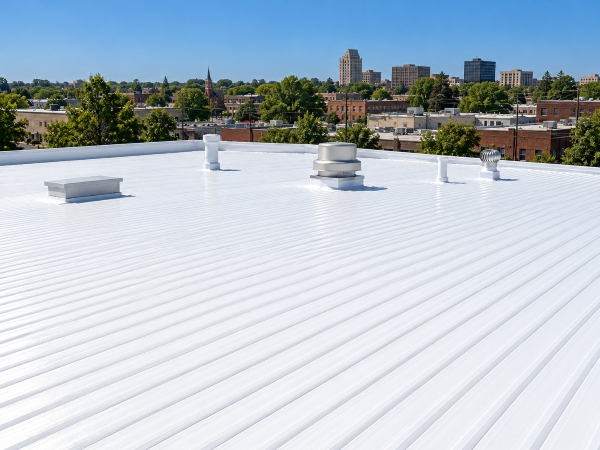
An acrylic roof coating in Coeur d’Alene, ID can be a good restoration option when the existing commercial roof is still a suitable base for coating, active defects are repaired, drainage is understood, and the surface can be prepared for adhesion. The decision should start with roof condition rather than assuming every aging roof is a coating candidate.
Flag Ship Foam and Coatings provides acrylic and silicone coating and restoration services for commercial properties in northern Idaho and Montana. For a Coeur d’Alene building owner, the useful question is whether acrylic fits the roof’s moisture condition, drainage, substrate, existing materials, and expected weather exposure, or whether another repair or restoration approach makes more sense.
What an Acrylic Roof Coating Does

Acrylic roof coating is a liquid-applied restoration material that cures into a protective surface over an existing roof. It does not replace the roof assembly below it, so the condition of the membrane, insulation, deck, seams, flashing, and drainage still matters.
Acrylic coatings are commonly light colored and reflective. That can reduce solar heat absorbed at the roof surface, but it does not guarantee a specific reduction in cooling costs. Insulation, HVAC efficiency, roof construction, sun exposure, and building use all affect the result. Flag Ship’s flat roof coatings page provides broader context for coating options in Coeur d’Alene.
When Acrylic May Be a Good Fit
Acrylic is most likely to fit when the roof can support a restoration system after needed repairs and preparation. The table below shows how common conditions affect the decision.
| Roof Condition | What It Means for Acrylic | What Should Be Confirmed |
|---|---|---|
| Roof assembly appears serviceable | May support a coating after inspection and preparation. | Condition of the existing roof, insulation, deck, seams, flashing, and previous repairs. |
| Localized seam or flashing defects | May still be a candidate after compatible repairs. | Which defects must be repaired before coating and whether surrounding materials remain suitable. |
| Recurring water accumulation | Requires separate drainage and system-compatibility review. | Cause of ponding, whether drainage can be corrected, and which coating system fits the actual condition. |
| Suspected concealed moisture | The scope should not be set until the moisture concern is investigated. | What is known about moisture and whether affected materials need removal or repair. |
| Damaged or unstable substrate | Surface coating alone is not enough. | What substrate or deck work is required before any restoration system is considered. |
| Unknown compatibility with an existing surface | May require testing or a different system. | Whether the proposed coating is compatible and can achieve the required adhesion. |
Ponding Water Is a Design Question, Not a Shortcut
Recurring standing water should be evaluated before the coating system is selected. Blocked outlets, low areas, settlement, slope, or drain configuration may be contributing to the condition.
Acrylic may be less suitable for some roofs with persistent ponding, while silicone or a drainage correction may be considered depending on the roof and system requirements. The important step is to identify the cause and compare compatible options rather than assume one coating automatically solves the drainage problem.
Conditions That May Require More Than Coating
A coating is a restoration layer, not a substitute for correcting failed materials below it. Widespread membrane failure, damaged substrate, or confirmed moisture in affected roof areas may require repair before coating, or may shift the project toward a broader restoration or replacement discussion.
Flag Ship’s flat roof repair page provides related repair context. Its commercial roof restoration page covers the broader restoration path when more than a surface application is involved.
Preparation Matters as Much as the Coating
The roof surface needs to be prepared so the coating can adhere as intended. Preparation may involve cleaning, removing loose material, correcting failed prior repairs, addressing seams and flashing, and confirming that the existing surface is compatible with the selected system.
A coating applied over unresolved defects or poorly prepared material can hide problems rather than solve them. The proposal should explain what preparation is included, what repairs are separate, and what conditions could change the scope once work begins.
Weather and Cure Conditions Affect Application
Acrylic is water-based, so application depends on suitable temperature, dry surfaces, and enough favorable weather for the coating to cure according to the system requirements. In northern Idaho, cold or wet conditions can affect scheduling.
There is no single calendar rule that applies to every project. The contractor should follow the actual temperature, moisture, and cure requirements for the coating being installed and explain how weather delays will be handled.
How an Acrylic Coating Project Is Typically Scoped
A coating project commonly includes several stages, although the exact scope depends on the roof:
- Evaluate the existing roof, drainage, visible defects, previous repairs, and areas of concern.
- Investigate moisture or substrate issues when they could affect coating suitability.
- Clean and prepare the roof surface for adhesion.
- Repair seams, flashing, penetrations, or localized damage included in the scope.
- Apply the acrylic coating under suitable conditions and according to the selected system requirements.
- Review completed work and document any maintenance or follow-up requirements that apply.
Questions to Ask Before Approving an Acrylic Proposal
- Why is acrylic the recommended coating for this roof?
- What roof conditions were checked before recommending coating?
- How will recurring ponding or drainage problems be handled?
- How were moisture concerns evaluated, and what remains uncertain?
- What cleaning, preparation, and repairs are included?
- How will adhesion or compatibility with the existing roof be confirmed?
- What weather and cure conditions apply to the selected system?
- What written warranty and maintenance terms apply to this specific roof system?
Maintenance After an Acrylic Coating
A coated roof still needs ongoing attention. Drainage, seams, flashing, penetrations, rooftop traffic areas, and the coating surface should be reviewed over time according to roof condition and any written maintenance requirements that apply.
Future recoating may be possible on some roofs, but it should not be treated as an automatic schedule. The timing depends on the roof condition, coating performance, repairs, exposure, and the requirements of the system in place.
Acrylic Roof Coating in Coeur d’Alene, ID
Flag Ship Foam and Coatings serves commercial properties in Coeur d’Alene and other northern Idaho markets. An acrylic coating can be a useful restoration option when the roof is a suitable candidate, the surface is properly prepared, and drainage, moisture, repairs, and cure conditions are addressed in the project scope.
Building owners can call (208) 946-3031 to discuss the roof and whether acrylic, silicone, repair, or another restoration approach may fit the property.
Frequently Asked Questions
Is acrylic roof coating the same as roof replacement?
No. Acrylic is a restoration coating applied over an existing roof that remains suitable for coating. It does not replace damaged substrate or resolve concealed moisture by itself.
Can acrylic be used on a roof with ponding water?
It depends on the cause of the ponding, whether drainage can be corrected, and the requirements of the coating system. Persistent standing water should be evaluated before the system is selected.
How long does an acrylic coating last?
There is no single service-life number that applies to every roof. Preparation, application, drainage, exposure, maintenance, repairs, and the selected system all affect performance.
Can acrylic roof coating be applied in cold weather?
Only when the selected system’s temperature, surface, moisture, and cure requirements can be met. Cold or wet conditions may affect scheduling in Coeur d’Alene.