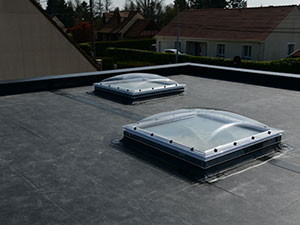
A rubber roof is usually an EPDM membrane, and its repairs work best when they match the actual defect. Some problems, such as a small puncture or a lifted seam edge, can be fixed locally. Others point to something wider, such as moisture under the membrane or shrinkage around the perimeter. Flag Ship Foam & Coatings repairs rubber roofs on commercial buildings in the Whitefish, MT area and can help you tell which situation you have. To discuss your roof, call (208) 946-3031.
If you are weighing longer-term options for your building, our membrane roof restoration overview and Whitefish TPO roofing article offer further background. An assessment can help you discuss those options alongside the immediate repair needs.
All About Rubber Roof Repair

EPDM roofs, commonly called rubber roofs, are popular for their resilience in harsh weather. Like any roofing material, they wear over time. Cracks, punctures, seam separation and membrane shrinkage can develop over time. Whitefish snow, freeze-thaw cycles and sun exposure create changing conditions that make inspection and maintenance important. Seeking expert attention early gives you a better chance of repairing a small defect before water travels into the roof system.
Flag Ship Foam & Coatings provides rubber roof repair for commercial properties. The process begins with an evaluation of the roofing system to find the weak spots and decide which ones need attention first. Repairs can then be matched to the problem instead of applied across the whole roof.
Matching Symptoms to Inspection Evidence
The table below shows what a contractor should look at for each common symptom and what the findings usually suggest. Notice that a visible symptom starts the investigation. It does not settle the diagnosis. In particular, an interior stain does not show where the water entered or how far it spread, so a stain by itself should not be treated as proof of hidden damage.
| Area | What may be visible | Evidence to gather | What it suggests |
|---|---|---|---|
| Seams | Visible separation, lifting edges or open tape along a seam | Whether the opening is limited to one area or runs along many seams, and whether the seam material still bonds | A short, isolated opening can often be repaired locally. Seams opening in many places point to a wider assessment |
| Penetrations | Cracked or lifted material around pipes, vents, curbs and equipment supports | Condition of the boot or flashing, the sealant and the membrane around the detail | A failed detail may need rebuilding, not only more sealant |
| Flashing and edges | Pulled-back flashing, gaps at walls or edge metal, shrinkage at the perimeter | Whether the membrane has shrunk, loosened or lost attachment near the edge | Perimeter movement can affect a wider area than the visible gap |
| Punctures and surface damage | Holes, cuts, cracks or worn spots in the membrane | Size, number and location of the damage, and the condition of the surrounding membrane | A few small punctures in sound membrane suit patching. Widespread cracking or wear suggests a broader look |
| Moisture extent | Interior stains, damp insulation, soft areas or repeated leaks | Moisture checks or testing that show where water has traveled and how far | A stain alone does not show the cause or the extent, so findings need confirmation |
Where Localized Repair Works
Localized repair suits a roof whose membrane is generally sound and whose defects are limited in number and size. Typical work includes patching small punctures and cracks with compatible rubber materials, re-securing a lifted seam, and re-sealing or rebuilding a flashing detail. These repairs rely on a clean surface and compatible materials, so the contractor has to identify the membrane and any earlier repairs first.
Localized repair has limits. It does not dry wet insulation, correct drainage problems or restore a membrane that has deteriorated across a large area. When the evidence points that way, the next step is a broader assessment, which may lead to seam reinforcement, coating, restoration or replacement. Those routes are covered on the Whitefish pages for flat roof caulking, commercial roof restoration and flat roof replacement.
What a Repair Quote Should Include
- The location and type of each defect, ideally marked on a roof plan or photographed.
- The repair method and materials, and why they are compatible with the existing membrane.
- Any moisture checking included, and what will happen if wet areas are found.
- Access and scheduling, including how the work affects tenants, deliveries and operations.
- What is not included, and what findings would change the scope.
When Further Assessment Is Needed
- Leaks return after a repair or appear in new locations.
- Seams are opening in many places, not one.
- The membrane is cracked, shrunken or worn across large areas.
- Insulation may be wet, or parts of the roof feel soft.
- The roof has had many earlier repairs or unknown layers.
Roof access should be planned with the contractor. Owners and building staff should leave work on the roof to trained crews. Regular inspections and maintenance can identify visible defects early and help owners plan timely repairs.
Rubber Roof Repair in Whitefish, MT
Rubber roof repair works best when the repair matches what the evidence shows. Delay can allow water to spread, but a hurried repair of the wrong spot does not help either. To have a Whitefish, MT rubber roof assessed, reach out to us at (208) 946-3031.
Frequently Asked Questions
Can a stain on the ceiling tell me where the roof leak is?
Not by itself. Water can travel before it shows inside, so a stain starts the investigation but does not identify the source or the extent of the damage.
What rubber roof problems can be repaired locally?
Small punctures, cracks, lifted seam edges and failed details on an otherwise sound membrane can often be repaired locally with compatible materials.
When is a broader roof assessment needed?
When leaks return, seams open in many places, the membrane is worn across large areas, or insulation may be wet. These point to more than a spot repair.
What should a repair quote include?
Defect locations, the repair method and materials, any moisture checking, access and scheduling details, and what is excluded or could change the scope.